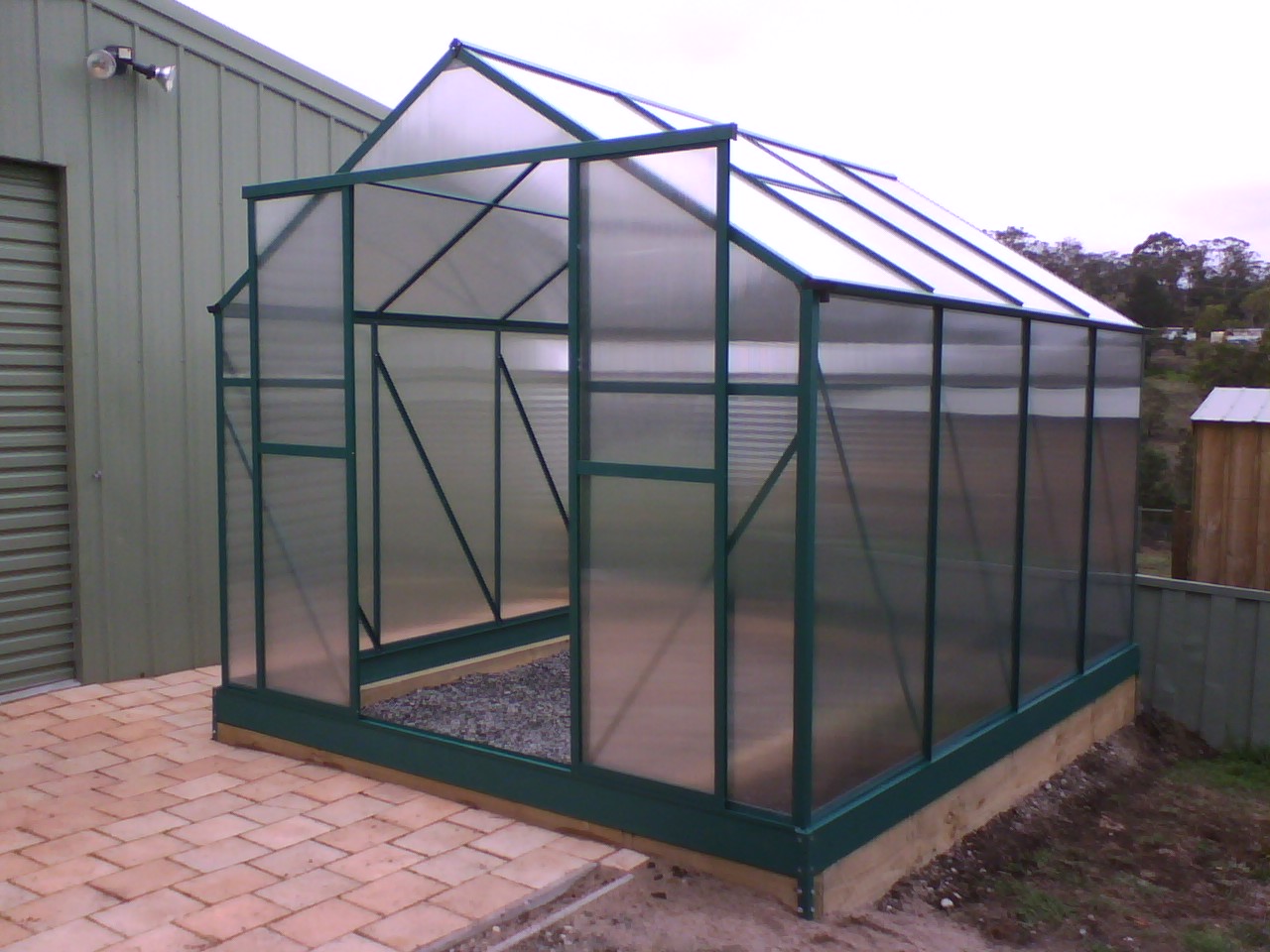
The choice between polycarbonate and glass is one of the first structural decisions greenhouse builders face, and in cold Canadian climates it carries more weight than in warmer regions. Both materials let light through, but their behaviour under prolonged sub-zero temperatures, snow accumulation, and freeze-thaw cycling differs considerably. The comparison below is based on how each material performs in practice rather than in ideal laboratory conditions.
Thermal Performance
Thermal performance is measured by R-value — the resistance of a material to heat flow. Higher R-values mean less heat loss, which translates directly into lower heating bills or the ability to maintain temperature with a smaller heat source.
Twin-Wall Polycarbonate
Twin-wall polycarbonate, typically sold in 8mm or 16mm panel thickness, achieves R-values of roughly R-1.5 to R-2.2 depending on thickness. The trapped air column between the two polycarbonate layers acts as insulation. Triple-wall and quad-wall variants push that further, with 25mm triple-wall panels reaching approximately R-3.0. This is modest insulation by residential wall standards, but for glazing it represents a significant improvement over a single layer of glass.
Single and Double Glass
Single-pane tempered glass — still common in older greenhouse designs — provides almost no insulation, with an R-value around R-0.9. Double-pane insulated glass units (IGUs), the kind used in residential windows, reach R-3 to R-4 with low-emissivity coatings. The problem is cost: a fully double-glazed greenhouse using quality IGUs costs roughly three to four times as much to glaze as one using twin-wall polycarbonate, and the weight of glass requires a significantly heavier frame.
In a climate zone where winter nights regularly reach −25°C, switching from single glass to 16mm twin-wall polycarbonate can cut overnight heat loss through the glazing by roughly 60%.
Light Transmission
Plants do not just need heat — they need light, and the quality of that light matters. This is where the comparison gets more nuanced.
| Material | Light Transmission | Light Quality | UV Blocking |
|---|---|---|---|
| Single glass | 90–92% | Undiffused, direct | Partial |
| Double IGU glass | 70–80% | Slightly diffused | Higher with Low-E |
| 8mm twin-wall polycarbonate | 80–83% | Diffused | UV-stabilised coating |
| 16mm twin-wall polycarbonate | 74–78% | Well diffused | UV-stabilised coating |
Diffused light is generally beneficial for greenhouse crops because it reaches all leaf surfaces more evenly than direct beam light. The internal fluting of polycarbonate panels scatters incoming light, reducing hard shadows and hot spots. Glass delivers a cleaner visual clarity, which matters less for vegetable growing than for ornamental display houses.
Note that polycarbonate has a UV-stabilised outer surface — usually indicated by a film or coating on one side — that must face outward. Installed backward, the polycarbonate will yellow within one to two seasons.
Weight and Structural Load
Glass is heavy. A square metre of 4mm tempered glass weighs roughly 10 kg. A comparable area of 8mm twin-wall polycarbonate weighs around 1.5 kg. This weight difference is significant in cold climates because the frame supporting the glazing must also carry snow loads.
In southern British Columbia, Alberta, and Ontario, design snow loads on greenhouse roofs commonly range from 1.4 kPa to 2.4 kPa depending on location and elevation. A glass greenhouse requires a stronger, usually steel or heavy timber, frame to handle that load safely. Polycarbonate greenhouses can use lighter aluminium extrusion systems, which also simplifies construction for non-professional builders.
Durability and Lifespan
Tempered glass, if not broken, lasts indefinitely and does not discolour. It withstands hail better than polycarbonate and holds its optical properties without degradation. The risk is breakage — a falling branch, a large hailstone, or an awkward moment during construction can shatter a glass panel completely.
Quality twin-wall polycarbonate from reputable manufacturers carries a 10-year UV warranty, after which light transmission begins to decline as the surface degrades. Practical lifespan for polycarbonate used as greenhouse glazing in Canadian climates is typically 15 to 20 years before panels become noticeably yellowed or brittle. Cheaper polycarbonate from unknown sources may fail in 5 years.
Cost Comparison
For a 12-square-metre backyard greenhouse, approximate glazing material costs (materials only, excluding frames) in 2025 Canadian dollars:
- Single tempered glass (4mm): $400–$700
- 8mm twin-wall polycarbonate: $350–$550
- 16mm twin-wall polycarbonate: $550–$850
- Double IGU glass: $1,800–$3,500
These ranges reflect the significant variation in supplier pricing. Buying polycarbonate from a greenhouse supply company rather than a big-box retailer typically delivers better UV protection and more consistent panel quality.
Which One for a Cold-Climate Greenhouse?
For most backyard growers in Canada building a new structure, 16mm twin-wall polycarbonate is the practical default. It offers meaningful thermal improvement over glass, costs less, weighs less, and is far easier to cut and install without professional help. The diffused light is adequate for virtually all food crops.
Glass becomes worth considering when the budget allows for double-pane IGUs, the frame design already accommodates the weight, and appearance matters — for example, a greenhouse attached to a house where the aesthetic needs to match the building. Single-pane glass in a cold climate is generally not recommended for heated greenhouses because the heat loss is substantial.